
TRAINING Description
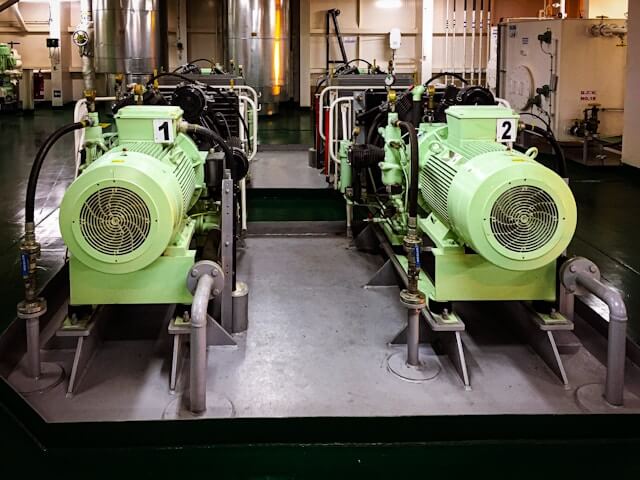
Training Compressor Operation Maintenance & Troubleshooting. Production continuity is a keyword in any process of production activities, in which power system play important role to keep all of the operation.
Compressor is known for its capability to store energy in the form of air pressure. In industrial application, compressors are completed with auxiliaries to control the air flow, pressure, and actuators. Compressors will become advantage if it’s operated and maintained properly. Compressors principles and their system performance however should be understood by operator and any person who get involved with them to increase performance of the operation, maintenance, safety, etc.
MATERI Training Compressor Operation Maintenance & Troubleshooting
1. FUNDAMENTALS:
* Explain the theory of air/gas compression.
* Describe how altitude and moisture affects the compression of air.
* Describe the principles of operation of positive displacement and dynamic compressors.
* Define air compression terminology such as absolute and gauge pressures, compressor
* Displacement and compressor capacity, free air, volumetric efficiency, single and double acting, single and multistage.
* Given relative data, perform basic calculations to solve for compressor displacement and compressor volumetric efficiency.
2. RECIPROCATING COMPRESSORS:
* State and describe the different types of single and multi-stage reciprocating compressors, state the function of the various compressor parts, including valves.
* Describe the methods employed to cool air or gas during compression.
* List and describe the different types of prime movers used for compressors.
3. ROTARY COMPRESSORS:
* Describe the principles of operation, their application, volume and pressure capabilities, methods of regulation, advantages and disadvantages of the following types of (positive displacement) rotary compressors:
1. sliding vane
2. the lobe type
3. roots type
4. screw
5. liquid-sealed
4. CENTRIFUGAL AND AXIAL COMPRESSORS:
* Describe the design and operation of the volute and diffuser type centrifugal compressors.
* Describe the design and operation of the single-stage double-flow and the four-stage centrifugal compressors.
* Describe the design and operation of an axial flow compressor.
* State the causes and remedies of compressor surging.
5. COMPRESSOR SYSTEM AUXILIARIES:
* Describe the design and operation of intercoolers and aftercoolers; state their location within the system, describe the maintenance requirements of these components.
* State the need for air receivers, their preferred location, and the inspection and maintenance requirements as per Code.
* Describe the use of air filters, list and provide a description of the different types commonly used.
6. OPERATION, CONTROL AND MAINTENANCE:
* Explain the following methods employed to control compressor output:
1. Start/stop, dual control
2. Variable-speed
3. Suction line valve
4. Suction or discharge valve
5. Adjustable stroke
6. Variable clearance volume
* List and describe the operation of the various types of controllers and safety devices used in a compressed air system. Describe how these devices can be tested while system is in operation.
* Describe the internal and external methods of compressor lubrication.
* State the various operational checks done by an operator on both the compressor(s) and the compressed air/gas system to ensure safe and efficient operation.
* State the preventive maintenance requirements of compressors, auxiliaries, piping and receivers.
* State the probable causes of compressed air/gas compressor, receiver or pipeline explosions.
7. ACT, REGULATIONS AND CODES:
* The candidate is expected to be able to locate information relating to the staffing, operation, maintenance, inspection, and testing of the compressor plant and its equipments.
8. SAFETY:
* The candidate is expected to be able to fully explain the dangers associated with the operation of a compressor plant and all its components, and state the precautions to be taken to minimize or prevent such dangers.
Jadwal Pelatihan 2025
| Batch | Tanggal | Tanggal | Tanggal |
|---|---|---|---|
| Batch 1 | 2 – 3 Januari | 16 – 17 Januari | 30 -31 Januari |
| Batch 2 | 1 – 2 Februari | 15 – 16 Februari | 28 - 29 Februari |
| Batch 3 | 5 – 6 Maret | 14 – 15 Maret | 27 - 28 Maret |
| Batch 4 | 3 – 4 April | 18 – 19 April | 29 - 30 April |
| Batch 5 | 2 – 3 Mei | 15 – 16 Mei | 29 – 30 Mei |
| Batch 6 | 4 – 5 Juni | 13 – 14 Juni | 26 – 27 Juni |
| Batch 7 | 3 – 4 Juli | 17 – 18 Juli | 30 – 31 Juli |
| Batch 8 | 1 – 2 Agustus | 14 – 15 Agustus | 28 – 29 Agustus |
| Batch 9 | 4 – 5 September | 17 – 18 September | 26 – 27 September |
| Batch 10 | 2 – 3 Oktober | 16 – 17 Oktober | 28 – 30 Oktober |
| Batch 11 | 5 – 6 November | 14 – 15 November | 27 – 28 November |
| Batch 12 | 3 – 4 Desember | 11 – 12 Desember | 19 – 20 Desember |
Silakan hubungi tim marketing kami untuk info lebih lanjut.
Lokasi dan Investasi
Pelaksanaan pelatihan oleh SITI Training dapat dilakukan secara fleksibel, baik offline maupun online, sesuai dengan kebutuhan dan preferensi peserta. Untuk pelatihan offline, kami menyediakan lokasi di berbagai kota besar di Indonesia:

Jakarta
5.500.000 IDR / peserta *

Yogyakarta
5.500.000 IDR / peserta *

Bali
5.500.000 IDR / peserta *

Bandung
5.500.000 IDR / peserta *
* Syarat dan ketentuan berlaku:
Investasi untuk pelatihan disesuaikan dengan jumlah peserta.
Silakan hubungi tim marketing kami untuk info lebih lanjut.
Training Online dan In-House
Bagi peserta yang lebih memilih pelatihan secara online, kami memfasilitasinya melalui aplikasi Zoom, memastikan pengalaman belajar yang interaktif dan efektif. Selain itu, kami juga melayani in-house training, di mana pelatihan dapat diselenggarakan langsung di lokasi perusahaan Anda, memberikan kenyamanan dan kemudahan bagi karyawan untuk meningkatkan keterampilan dan kompetensi mereka tanpa harus meninggalkan tempat kerja.
Catatan : Apabila perusahaan membutuhkan paket in-house training, anggaran investasi pelatihan dapat menyesuaikan dengan anggaran perusahaan.
Fasilitas Training
Sebagai peserta training, Anda akan menikmati fasilitas berikut.
Fasilitas training online:
- Instruktur yang berkompeten
- Sertifikat Keikutsertaan Training
- Training Kit
- Modul / Handout (Soft Copy)
- Hasil record selama pelatihan online
- Sudah termasuk PPh 23 dan PPh Final
- Souvenir
Fasilitas training offline:
- Instruktur yang berkompeten
- Sertifikat Keikutsertaan Training
- Training Kit
- Modul / Handout (Soft Copy)
- Hasil record selama pelatihan online
- Sudah termasuk PPh 23 dan PPh Final
- Souvenir
- Pelatihan di Hotel Berbintang
- 2x Coffe Break & 1x Lunch (Makan Siang)
- Training Room Full AC and Multimedia
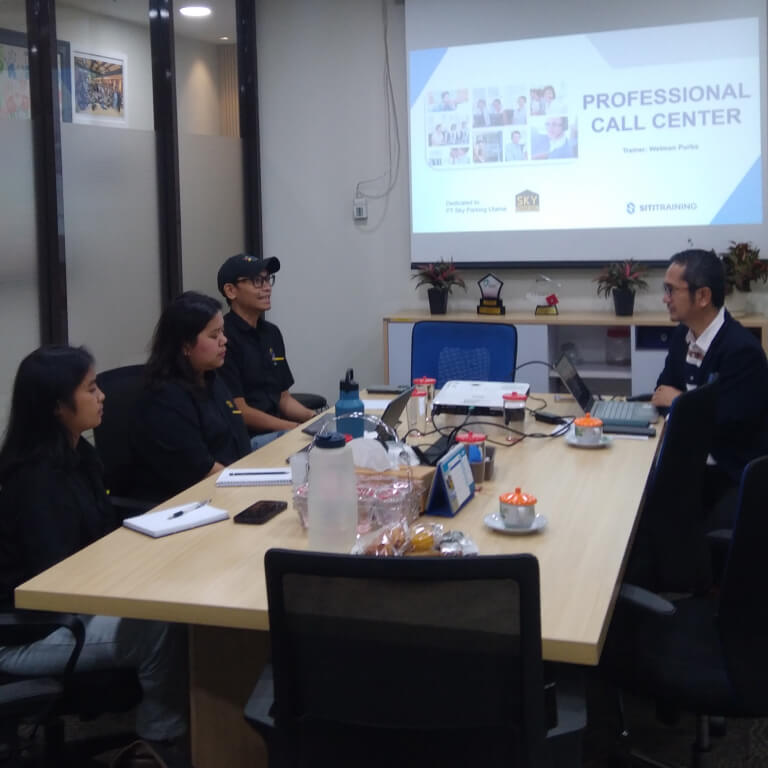
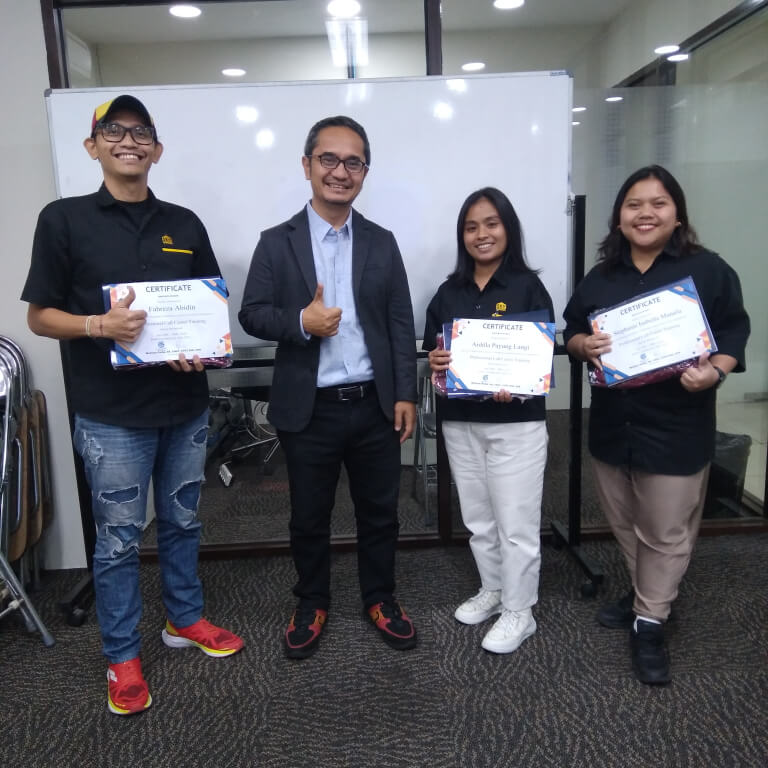
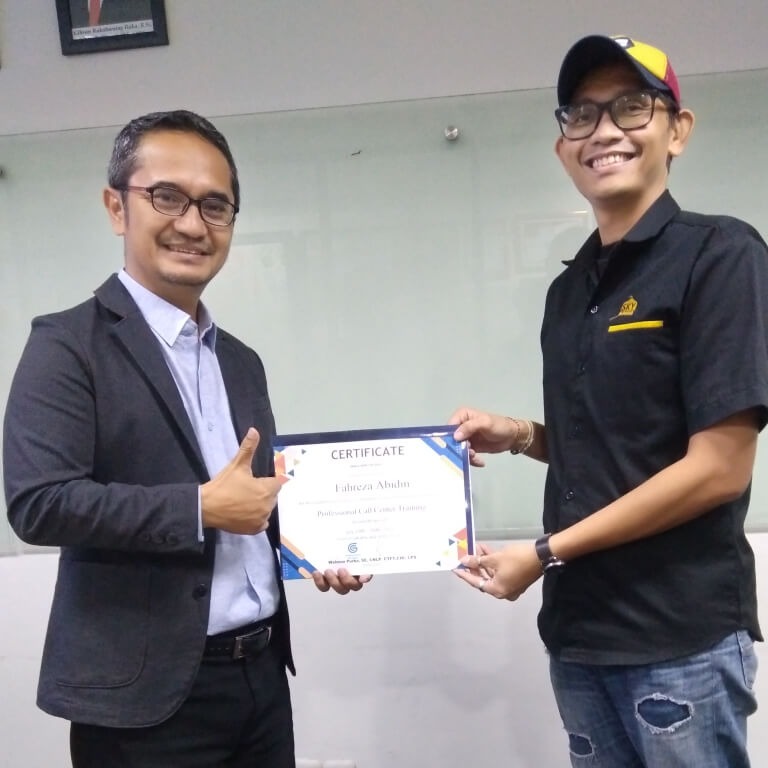
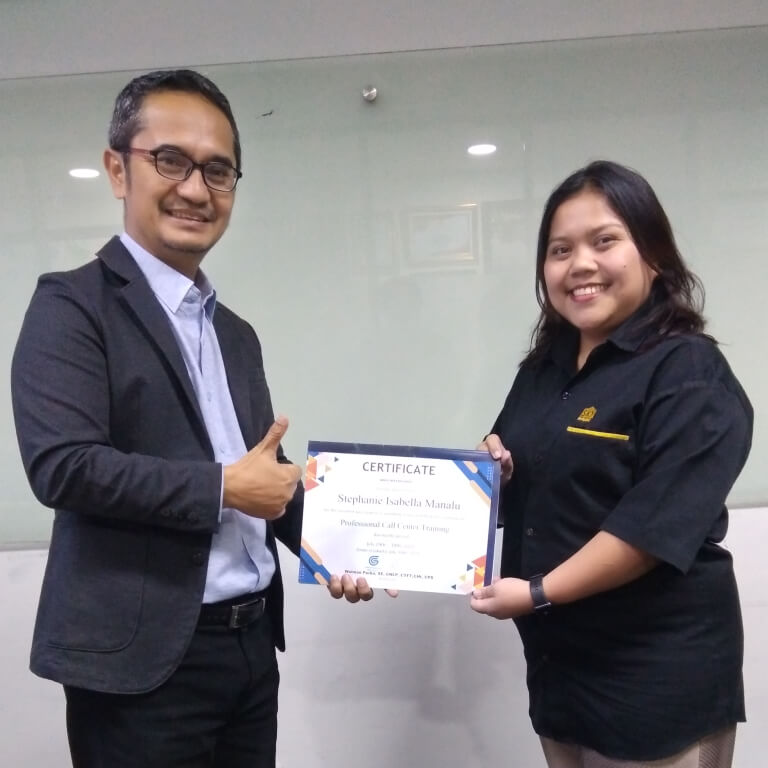
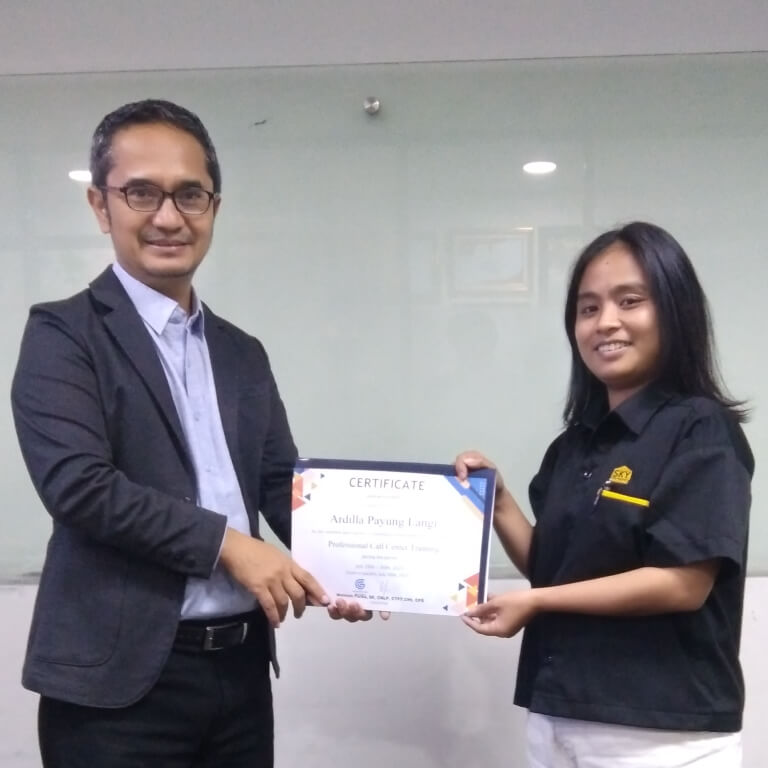
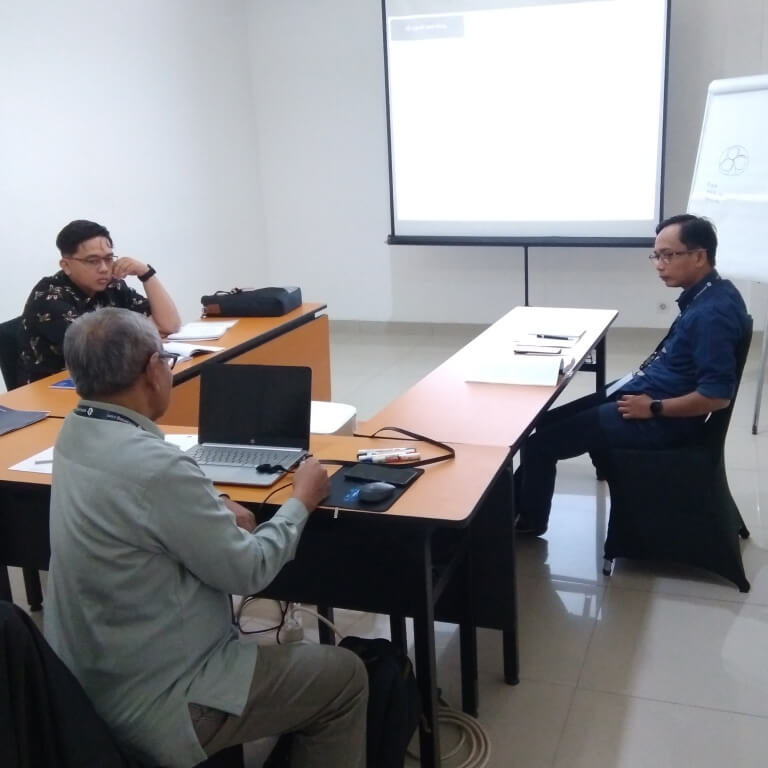
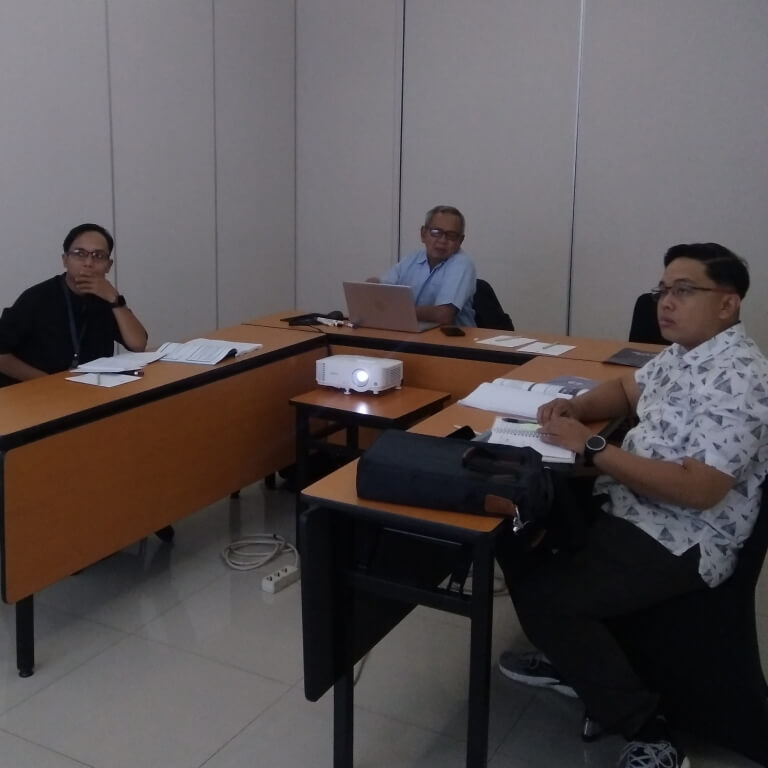
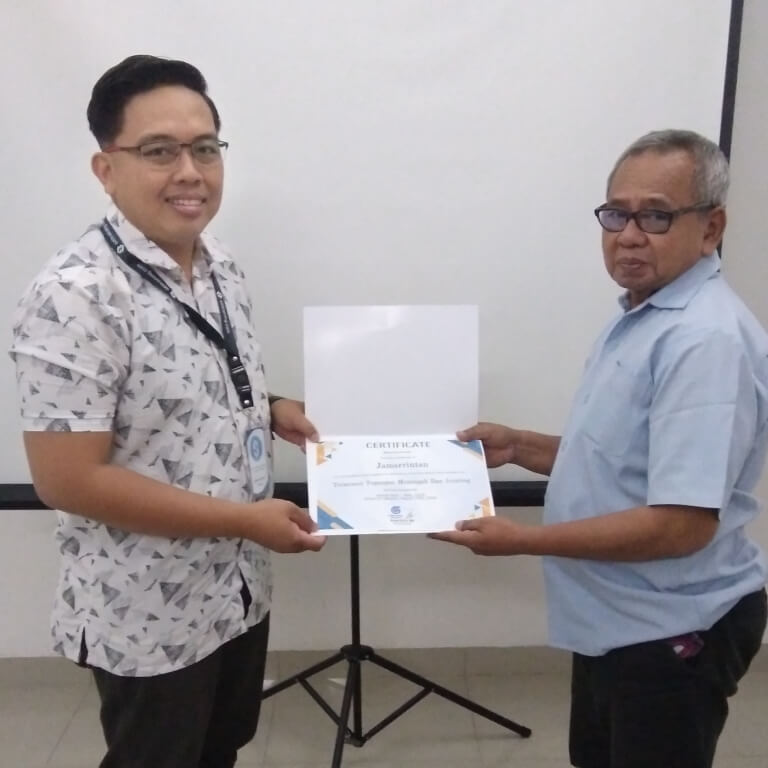
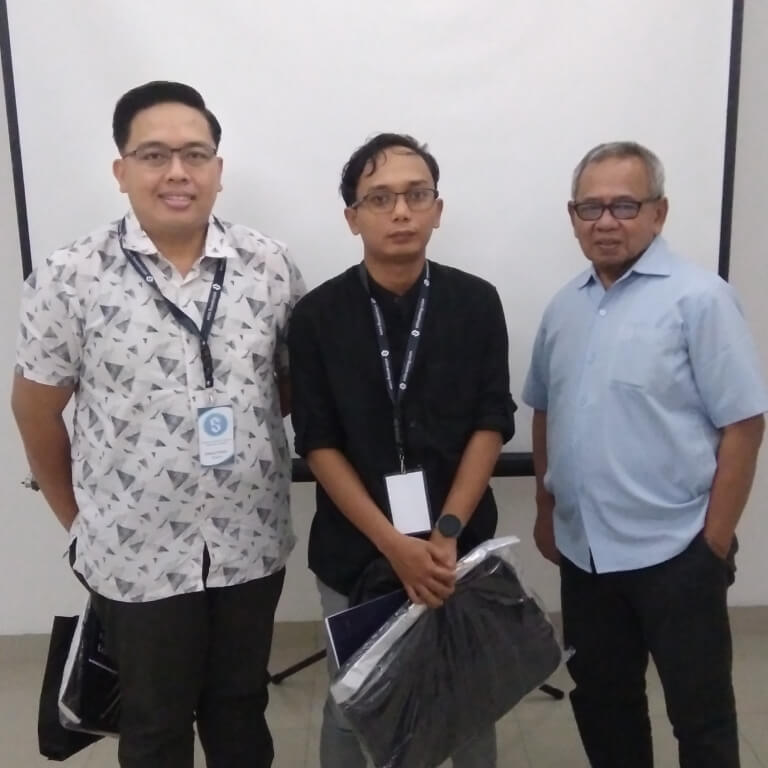
Galeri Dokumentasi Kegiatan Training






 Rifki
 Fitri
 Etika